
Objective
The EESP workshop fosters the exchange of innovative strategies, tools, and best practices to enhance energy efficiency across modern computing environments. With rising energy costs, increasing CO2 emissions, and growing pressure on power infrastructure, optimizing energy use is now critical for sustainable computing. The workshop explores how to balance performance, power, and sustainability, providing participants with a guidebook of actionable strategies for exascale, Tier-1, and Tier-2 centers. Through greener, cost-effective, energy-efficient practices, including system–application co-design, attendees gain a competitive edge in advancing sustainability. Aligned with the Sustainable Development Goals, EESP promotes collaboration between HPC and AI communities to support environmentally responsible innovation. It offers guidance for system operators and facility managers on reducing Power Usage Effectiveness (PUE) and sourcing green energy, while helping users design energy-conscious experiments. EESP also addresses full-lifecycle sustainability, from system design and operation to reuse and decommissioning, and examines how HPC strategies can support energy-efficient AI infrastructure amid growing convergence. While current tenders often emphasize raw hardware metrics, the workshop highlights sustained (application) performance, rather than peak performance, as the key measure of long-term success.
Scope
EESP invites academia, supercomputing centers, industry, national laboratories, and policymakers to collaborate on advancing energy-efficient practices. To achieve end-to-end visibility and adaptability in energy usage, EESP emphasizes cross-layer innovation, encompassing advances in hardware, software, runtime systems and system-application co-design. This includes data-driven analytics and monitoring, energy-efficient methodologies, operational case studies, benchmarking frameworks, AI–HPC convergence, and sustainability metrics that extend beyond energy efficiency, such as carbon emissions. The workshop fosters dialogue between Tier-0/1 and Tier-2 centers to help adapt Tier-0/1 innovations for more constrained budgets. While investment priorities differ across tiers, challenges in software and applications remain universal, serving as a unifying link. It targets financial and technical solutions applicable to HPC clusters, data centers, and cloud infrastructures worldwide.
Topics of Interest
The workshop aims to benefit the broader community by sharing use cases, lessons learned, and best practices through descriptive papers. To achieve the workshop's objectives and to address emerging challenges, we solicit papers which encompass the following topics of interest, but are not limited to:
- Energy-aware software and application optimization
- Programming models, compilers, and tools for energy-efficient computing
- Energy-efficient hardware architectures and design practices
- Energy-aware resource management, and power-steering runtimes
- Operating system and network techniques for power and thermal control
- Tools/frameworks for energy monitoring, instrumentation and analysis
- Processor and system energy models including behavioral insights
- Cluster-wide energy benchmarking and regression analysis
- Comparative benchmarking of node architectures and memory systems
- Analysis of long-term energy degradation in CPUs and GPUs
- Sustainable HPC through mixed precision algorithms
- Renewable energy sources for HPC systems
- Energy-efficient procurement frameworks and lifecycle cost analysis
- Operational analytics and control for real-time power adaptation
- Integration, energy/performance profiling and optimization of AI workloads
- Emerging trends and challenges in HPC/AI energy consumption
Call for Papers
The EESP Workshop 2026 invites submissions of research papers focused on energy efficiency and sustainable performance in high-performance computing and artificial intelligence.
- Submission Guidelines
- Papers should be either short (work-in-progress, 4 two-column pages) or regular (8 two-column pages); references, appendices, and reproducibility artifacts are excluded from the page limit.
- Submitted papers must be original and not previously published or under review elsewhere.
- Content generated by AI tools must be transparently and thoroughly described, and AI systems cannot be credited as authors.
- Use the IEEE conference proceedings template.
- Authors may optionally submit an artifact description and artifact evaluation (AD/AE) appendix detailing their software environments and computational experiments to enable independent replication. The AD/AE appendix will not be reviewed but will be included after acceptance, in accordance with SC guidelines.
- Submit papers in PDF format through the SC Linklings submission system; Link: TBA.
- Review Process
- Each submission will undergo a minimum of three double-blind peer reviews; authors must remove all identifying information from the manuscript.
- Review criteria include originality, technical soundness, impact, and quality of presentation.
- Post-Submission
- Authors can submit one extra page for short papers or two extra pages for regular papers after the review to address reviewer feedback.
- One author must present the accepted paper in person and register for the SC 'Technical Program Pass' or 'Workshop Only Pass.'
- Information on travel, visas, accommodation, and attractions in Chicago is available on the SC 2026 website.
- The Best Paper Award Certificate will be presented in person at the workshop.
Opportunities
EESP Paper Proceedings

Papers accepted and presented at EESP 2026 will be published as part of the SC workshop proceedings in the IEEE Xplore Digital Library.
Best EESP Paper Award

The workshop program and organizing committee will select one paper for the Best Paper Award. The selection will be based on the established review criteria: originality, technical soundness, potential impact, significance, and quality of presentation. The Best Paper Award certificate will be presented in person during the workshop.
EESP Special Journal Issue

The authors of the highest-quality accepted EESP papers, as selected by the Program and Organizing Committee of the workshop, will be invited to submit extended versions of their work to a special issue of the International Journal of High Performance Computing Applications (IJHPCA).
Featured Speech
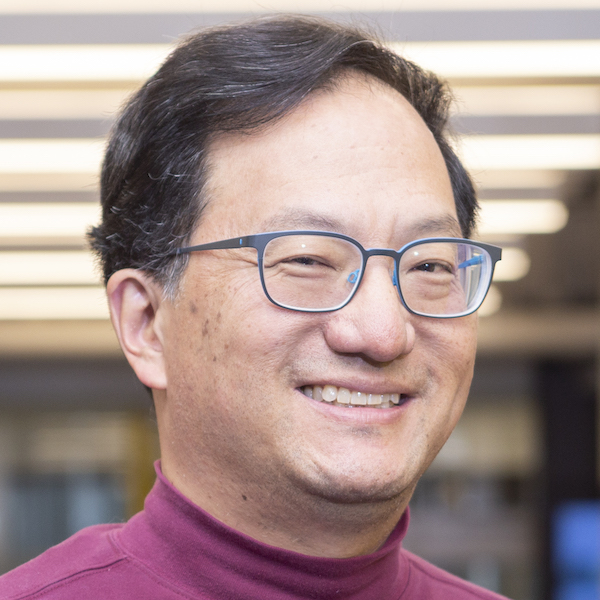 |
The University of Chicago, Argonne National Laboratory |
Holistic Power Efficiency: Squeezing Computing out of Every Watt
Abstract The rapid growth of AI is driving a sharp increase in electricity demand. Amplified slowing hardware efficiency improvements and Jevons’ paradox, computing is now a significant share of global energy use, stressing power grids and challenging decarbonization efforts. We present a holistic view of power efficiency, where all elements of the datacenter – cooling, power conversion, backup, and computing are carefully managed for efficiency. This complements cross-layer efforts, spanning hardware, systems, and the software stack, and application-level such as model optimization, workload shaping, and adaptive execution. These approaches are all critical for load-flexibility that can align power use with variable and low-carbon energy sources. We discuss the Zero-Carbon Cloud (ZCCloud) model and recent work on Middlebox that unlock grid capacity as well as lower power-cost and emissions. These approaches maximize computing per watt while supporting grid decarbonization.
BIO Dr. Andrew A. Chien is the William Eckhardt Distinguished Service Professor of Computer Science at the University of Chicago and a Senior Computer Scientist at Argonne National Laboratory. He is a leading researcher in sustainable computing, supercomputer architecture, and cloud software and hardware. He is the founder and director of the UChicago CERES Center for Unstoppable Computing and leads the Large-scale Sustainable Systems Research Group. He is a Fellow of the ACM, IEEE, and AAAS, and serves on the National Science Foundation’s CISE Advisory Committee (2006–2011, 2020–present) and DARPA’s ISAT Study Group. He has also served on advisory boards for major universities (including Stanford, UC Berkeley, University of Washington, and EPFL), as well as national and corporate research labs. From 2017 to 2022, he was Editor-in-Chief of Communications of the ACM. From 2005 to 2010, he was Vice President of Research at Intel, leading long-range and disruptive computing research and overseeing global government and university engagement. Previously, he was SAIC Endowed Chair Professor at UC San Diego and founding director of the Center for Networked Systems (1998–2005). He also co-founded and served as CTO of Entropia, an early grid computing company (1999–2003), and was a professor at the University of Illinois at Urbana-Champaign and NCSA (1990–1998). Dr. Chien received his ScD, SM, and SB degrees from the Massachusetts Institute of Technology.
Workshop General Chair
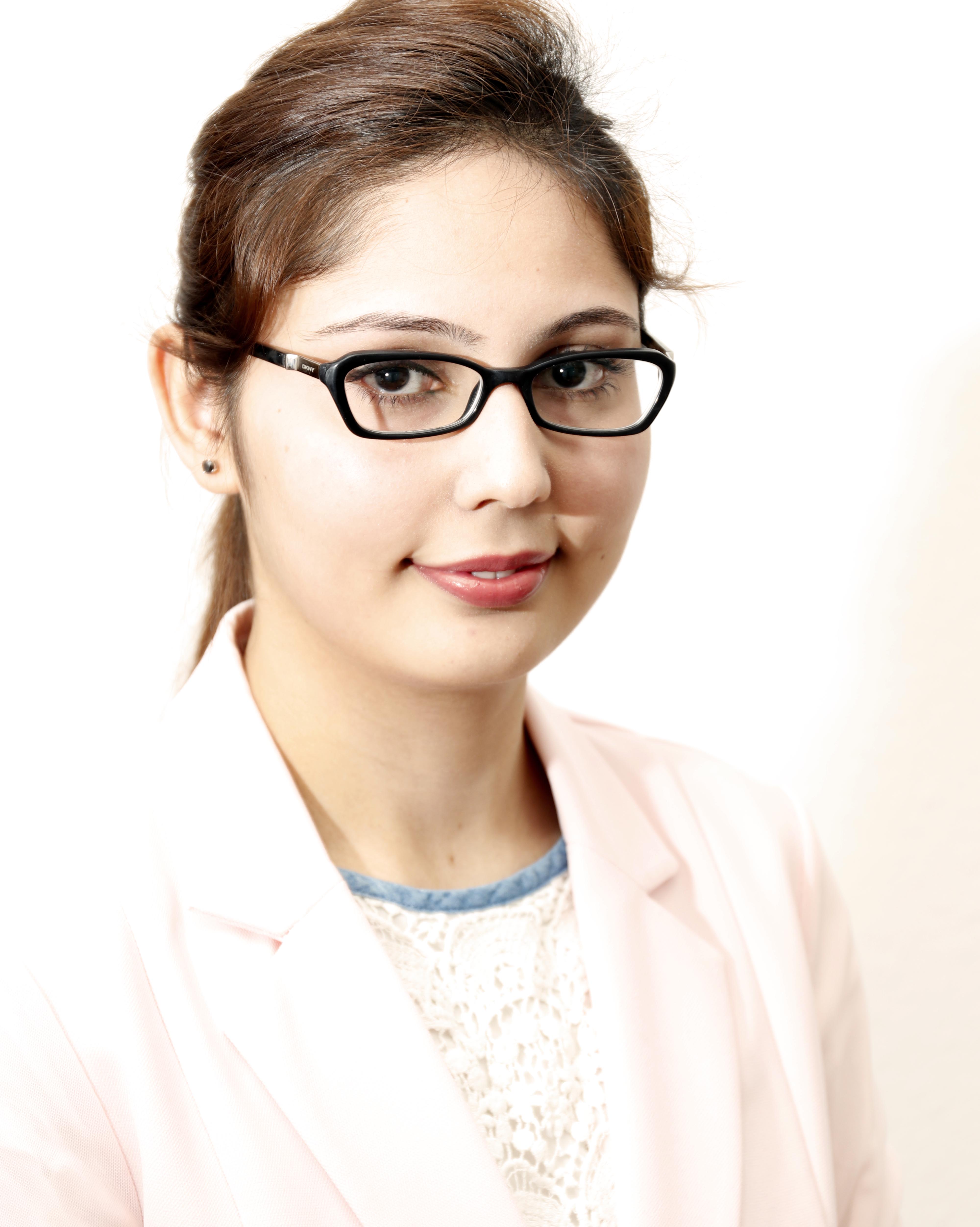
Ayesha Afzal - Erlangen National High Performance Computing Center (NHR@FAU), Geramny
Program Co-Chairs
- Natalie Bates - Energy Efficient HPC Working Group (EE HPC WG), USA
- Bronis R. de Supinski - Lawrence Livermore National Laboratory (LLNL), USA
- Hatem Ltaief - King Abdullah University of Science and Technology (KAUST), Saudi Arabia
Program Committee
-
TBA
Collaborators
-
 A DFG RESEARCH UNIT: Holistic Energy and Performance Modeling for Sustainable Computing
-
 Erlangen National High Performance Computing Center (NHR@FAU)
-
 Energy Efficient HPC Working Group (EE HPC WG)
Past Editions
← ISC EESP (June 26, 2026, Hamburg, Germany): [Website] [Springer Proceedings: TBA]
← ISC EESP (June 13, 2026, Hamburg, Germany): [Website] [Springer Proceedings]
Contact
For questions, please contact the General Chair: Ayesha Afzal at ayesha.afzal@fau.de.
Announcements
Call for Paper Open and Keynote Announced!
Paper submission for SC EESP 2026 proceedings is open and Keynote speech by Andrew Chien has been announced. Check the technical details here.
Important Dates
- Submission deadline: July 25, 2026, AoE
- Notification: Sep 1, 2026, AoE
- Camera ready deadline: Sep 25, 2026, AoE
- Workshop date: Nov 2026
[SC EESP Nov 2026] 3rd ed. Highlights
- Highest 3/3 score by 3 reviewers in SC workshop proposal review
- NEW!! SC IEEE Xplore DL Proceedings
- Keynote by Andrew A. Chien, UChicago
- Others: TBA
[ISC EESP June 2026] 2nd ed. Highlights
- Highest 3/3 score by 4 reviewers in ISC workshop proposal review
- 19 papers received from 12 countries
- 11 papers accepted from 8 countries
- NEW!! Workshop extended to a full-day format
- NEW!! Special Journal Issue at IJHPCA
- 51 committee members across 18 countries
- Keynote by John Gustafson, ASU & Vq Research
- 4 sessions by 4 chairs from 4 countries
[ISC EESP June 2025] 1st ed. Highlights
- 22 papers received from 11 countries
- 8 papers accepted, 36% acceptance ratio
- 37 committee members across 16 countries
- Keynote by John Shalf, LBNL
- 40 attendees (overlap with ISC tutorials)
- 4 sessions by 4 chairs from 4 countries
- Best Paper: “What A Waste,” Queen's University
- 4.9/5 score in ISC post-evaluation survey
- Free access to proceedings until mid-Jan 2026